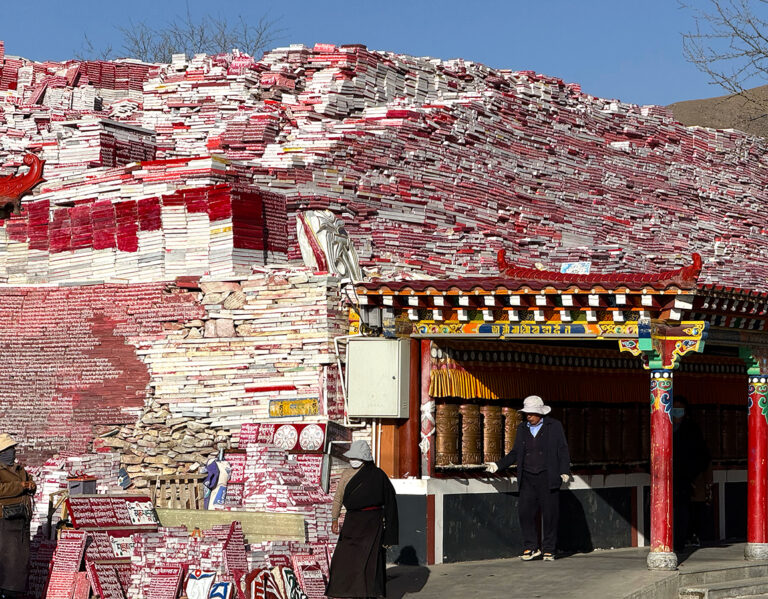
While the plateau of Yushu is defined by the silent endurance of stone and mountain, the lowlands of Chengdu find their soul in the explosive, colorful, and lightning-fast world of Sichuan Opera (Chuanju). One of the oldest and most popular forms of Chinese opera, it is a high-energy spectacle that blends traditional singing and acting with acrobatic stunts, fire-breathing, and its most famous guarded secret: Face-Changing (Bian Lian). To witness a performance in an old Chengdu teahouse is to see the history of the Sichuan people told through a lens of wit, humor, and theatrical magic.
Sichuan Opera is structurally unique compared to its more famous cousin, Beijing Opera. It relies heavily on “vocal acrobatics” and a five-part system of melodies, but its true charm lies in its common-man perspective. The scripts are often filled with sharp, earthy humor and local dialects, reflecting the spirited and egalitarian nature of the Sichuanese. Beyond the singing, the performances include “stunt” techniques that are physically demanding. For example, “Rolling Light” involves a performer balancing a lit candle on their head while performing a series of acrobatic maneuvers, including squeezing through a narrow bench, symbolizing the domestic struggles of a henpecked husband.
The undisputed climax of any show is Face-Changing, a technique where performers switch vivid, silk masks in a fraction of a second with a flick of the head or a wave of a fan. These masks represent different emotions or spirits—green for anger, red for loyalty, gold for the divine. The mechanics of the change are considered a “Grade II State Secret” in China, passed down through tight-knit theatrical families. In 2026, the tradition has evolved with modern stagecraft; performers now use laser-integrated costumes to enhance the dramatic “pop” of the change, though the fundamental mechanics remain rooted in ancient sleight-of-hand.
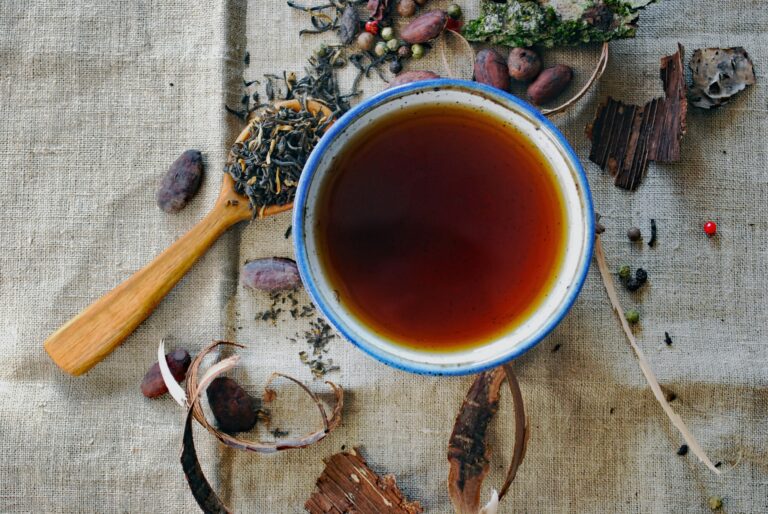
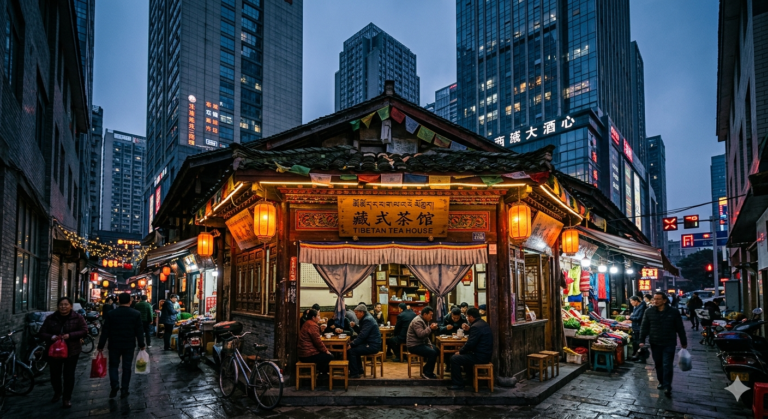
Experiencing Sichuan Opera in Chengdu is as much about the environment as the stage. Many of the most authentic performances take place in teahouses like the Shufeng Yayun, where the audience sits in bamboo chairs, sips Gaiwan tea, and snacks on sunflower seeds while the drama unfolds. By 2026, many of these venues have integrated “behind-the-scenes” experiences, allowing visitors to watch the elaborate two-hour makeup process before the show begins. It is a sensory bridge that connects the ancient aesthetics of the “Land of Abundance” with the vibrant, fast-paced energy of modern Chengdu, proving that some traditions are best kept hidden behind a mask.