The Rooftop of the World: Sanjiangyuan National Park
The ultimate destination of our overland journey is Sanjiangyuan National Park. Meaning “Source of Three Rivers,” the name refers to the vast area of the Tibetan Plateau in Qinghai province …
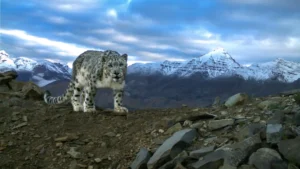
This April we are venturing into China’s backcountry to track the elusive snow leopard and analyze how traditional nomadic herders are pioneering a new approach to environmental and wildlife management. Getting to our field site requires a dramatic ascent, taking us from the urban lowlands of Chengdu (elevation 1,480 ft.) straight up to the rugged Tibetan Plateau (elevation 12,300 ft). Along the way we will be taking a deep dive into the unique history and culture of this area which will help us understand the context of the wildlife-human interaction on “the rooftop of the world.”
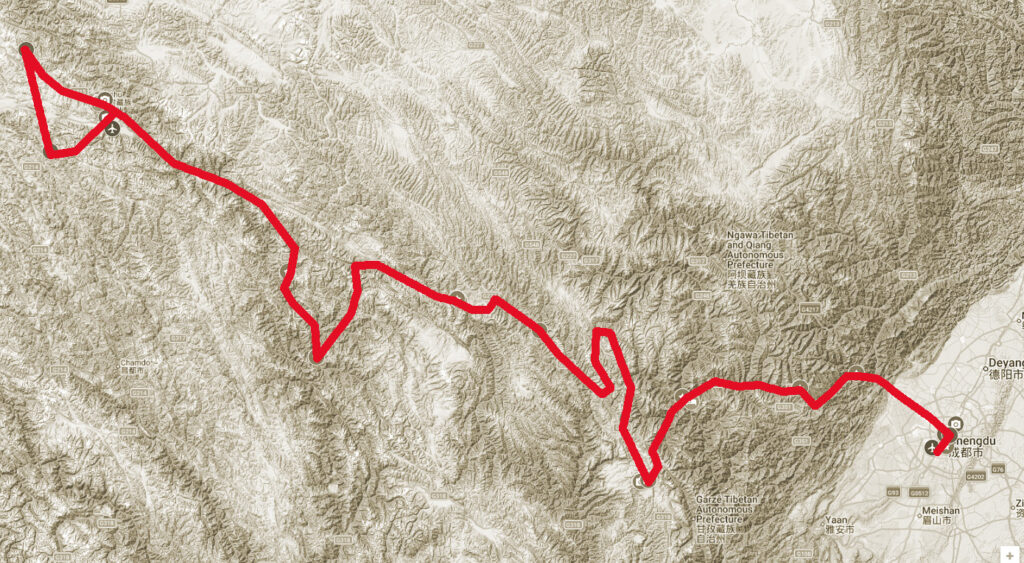
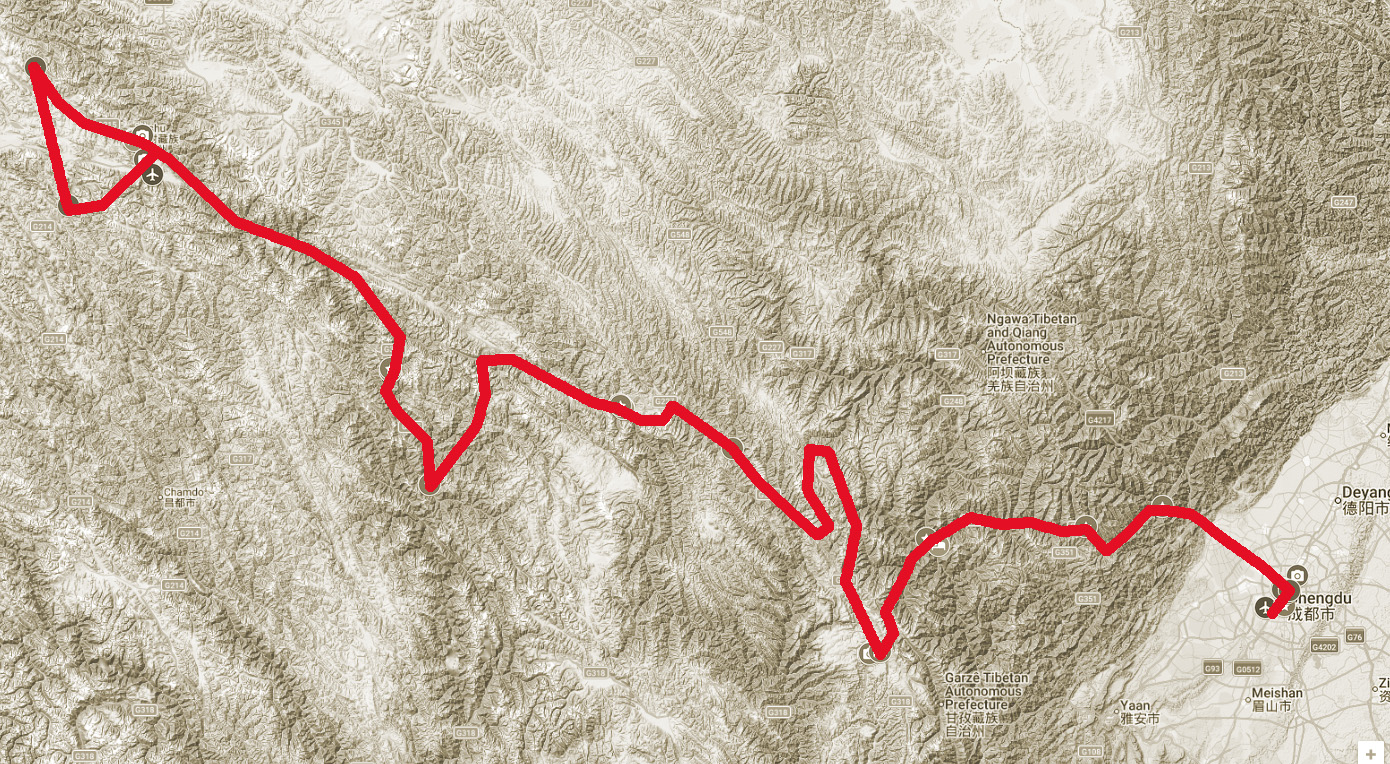
Click to view full routeFollow along with the journey in real time as we post regular updates about the preparations for the expedition, and then live dispatches from the field.

The ultimate destination of our overland journey is Sanjiangyuan National Park. Meaning “Source of Three Rivers,” the name refers to the vast area of the Tibetan Plateau in Qinghai province …

The journey will include retracing a segment of one of the world’s most arduous and historically significant trade routes: The Tea Horse Road…

This April we are venturing into China’s backcountry to track the elusive snow leopard and analyze how traditional nomadic herders are pioneering a new approach to environmental and wildlife management…

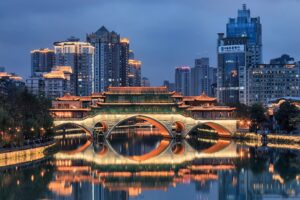
We start the Overland
Journey from Chengdu
at the edge of the
Sichuan Basin.

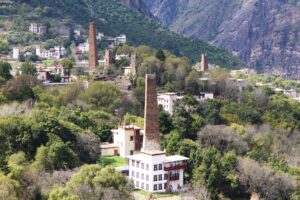
We leave the city and start
the dramatic climb up to
the plateau to the first
Tibetan villages.

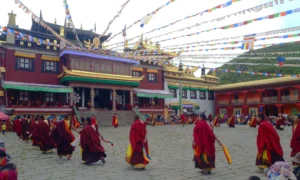
We begin the deep dive into
the unique culture and
religious practices.
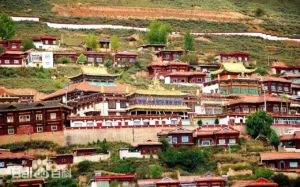
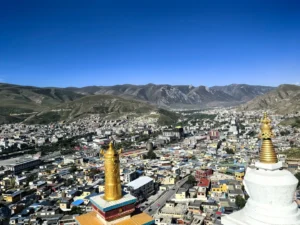
Ancient Monasteries and
wide open spaces at 12,000 ft
of elevation.

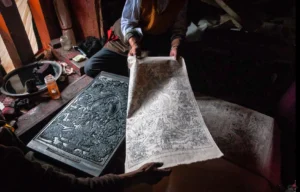
Ancient printing techniques
and the Khampas

Reaching the edge of the
Sanjiangyuan and the start
of the main mission.
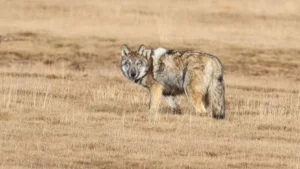
Wildlife monitoring zone
and meetings with herders

Wildlife monitoring zone
and meetings with herders

Wildlife monitoring zone
and meetings with herders
at 14,074 feet
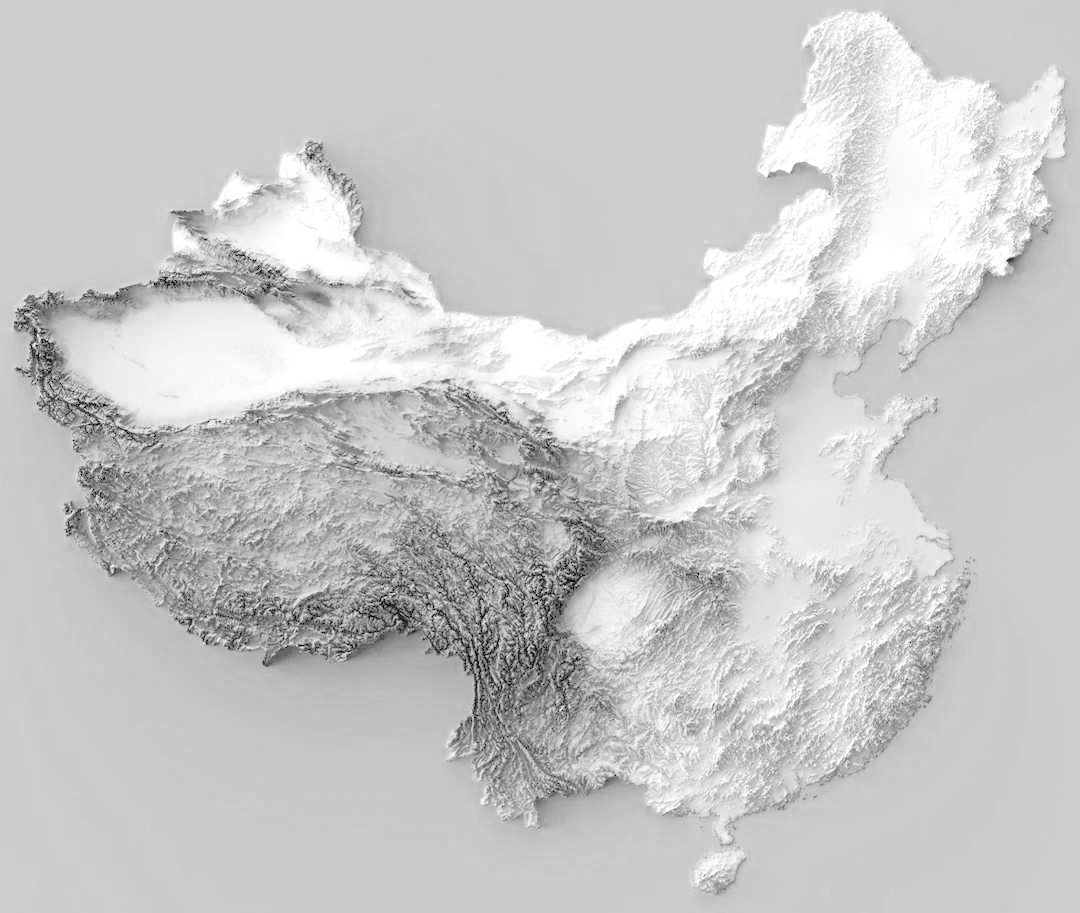
Our journey covers two provinces of China: Sichuan and Qinghai. The vast plain on which Chengdu is located, known as the Sichuan Basin, has an elevation ranging from 1,480 to 2,360 feet. The city of Yushu (our base for the Snow Leopard scouting), on the Tibetan Plateau, has an elevation of around 12,100 ft with an alpine sub-arctic climate.
The Sichuan Basin, sometimes called the Red Basin, is a lowland region in southwestern China. It is surrounded by mountains on all sides and is drained by the upper Yangtze River and its tributaries. The basin is anchored by Chengdu, the capital of Sichuan province, in the west, and the direct-administered municipality of Chongqing in the east. Due to its relative flatness and fertile soils, it is able to support a population of more than 100 million. In addition to being a dominant geographical feature of the region, the Sichuan Basin also constitutes a cultural sphere that is distinguished by its own unique customs, cuisine and dialects. It is famous for its rice cultivation and is often considered the breadbasket of China. In the 21st century its industrial base is expanding with growth in the high-tech, aerospace, and petroleum industries.
The Tibetan Plateau, also known as the Qinghai–Tibet Plateau or Qingzang Plateau, is a vast elevated plateau located at the intersection of Central, South, and East Asia. Geographically, it is located to the north of Himalayas and the Indian subcontinent, and to the south of Tarim Basin and Mongolian Plateau. Geopolitically, it covers most of the Tibet Autonomous Region, most of Qinghai, western half of Sichuan, Southern Gansu provinces, southern Xinjiang province in Western China, Bhutan, the Indian regions of Ladakh and Lahaul and Spiti (Himachal Pradesh) as well as Gilgit-Baltistan in Pakistan, northwestern Nepal, eastern Tajikistan and southern Kyrgyzstan. It stretches approximately 620 miles north to south and 1,600 miles east to west. It is the world’s highest and largest plateau above sea level, with an area of 970,000 square miles. With an average elevation exceeding 14,800 ft and being surrounded by imposing mountain ranges that harbor the world’s two highest summits, Mount Everest and K2, the Tibetan Plateau is often referred to as “the Roof of the World”. The Tibetan Plateau encompasses approximately 1/4 of China’s territory and contains extensive rangelands, wetlands, deserts and high mountain ranges.
RETURN TO: The Roadbook | Expedition Main Page | Expedition Field Notes