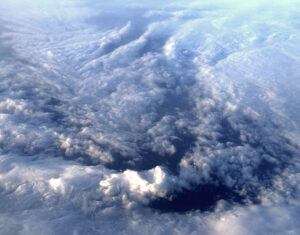
The journey to the Eastern Tibetan Plateau is not just about traveling across a surface; it is about navigating a violent, vertical landscape that is still under construction. The Tibetan Plateau is often referred to as the “Third Pole” because it contains the largest reserve of freshwater ice outside of the Arctic and Antarctic circles. Spanning over 2.5 million square kilometers and sitting at an average elevation of over 4,000 meters, its vast glaciers and permafrost provide a vital water source for nearly two billion people. But its extreme altitudes, unpredictable weather patterns, and jagged, ice-locked terrain present a formidable barrier to travelers.
To step onto the Tibetan Plateau is to enter a realm where the geography is actively hostile to human biology. For those seeking to track the “Ghost of the Mountains,” the challenges are not merely professional; they are existential. On the Plateau, the beauty of the landscape is a thin veil over a confluence of physiological, atmospheric, and tectonic dangers.
Here the earth doesn’t just rise — it fractures. The terrain is a punishing mosaic of high-altitude alpine meadows and sheer, crumbling cliffs. This vertical relief is what makes Sanjiangyuan the premier snow leopard habitat on earth, but it presents a nightmare for the outsider who wants to observe it. To track a leopard here is to commit to a constant cycle of ascent and descent at elevations where the air provides only a fraction of the oxygen found at sea level. The “Ghost” moves effortlessly across these 5,000-meter ridges, while the human observer, burdened by tripods and long-range optics, must contend with the constant threat of Acute Mountain Sickness (AMS) and the sheer physical exhaustion of “side-hilling” on loose shale.
At an average elevation of over 4,500 meters, the primary adversary is the atmosphere itself. The “Third Pole” offers only about 60% of the oxygen available at sea level, forcing the human heart and lungs into a state of permanent overexertion. This chronic hypoxia leads to more than just exhaustion; it creates a mental fog that makes precision a grueling task. The weight of the camera gear feels doubled when your heart rate is redlining just from standing up.
The weather on the plateau is notoriously bipolar. You can experience four seasons in a single afternoon. In snow leopard territory, temperatures can plunge to -40° Celsius (which is, incidentally, where Celsius and Fahrenheit meet). Batteries drain in minutes in the cold. LCD screens can freeze or lag, and the internal lubricants of a 600mm lens can freeze solid, rendering the autofocus useless at the very moment a leopard crests a ridgeline.
The specific field site where we will be working in Haxiu is defined by Limestone Karst. This topography creates steep gray spires, deep hidden couloirs, and countless caves. For a snow leopard, this is the perfect camouflaged fortress, allowing them to move through the landscape without being seen by prey or humans. For us, this topography creates a “3D maze.” A map might show you are 500 meters from a target ridge, but in reality, you have to descend a 300-meter gorge and climb up the other side.
Standard GPS apps (Google Maps, Apple Maps) often fail on the plateau. They show main roads but obscure the rugged terrain contour lines necessary for overland travel. For safety we must download offline maps that show elevation contours before we leave, so we can identify steep slopes (avalanche risks) and deep gorges (logistical bottlenecks). We will also carry a handheld Garmin GPS unit as a backup. However, the most detailed “maps” are often in the memories of the nomad-rangers. They don’t need GPS; they know the landscape by the names of individual rocks, ridges, and seasonal grazing spots.
Beyond the visible harshness of the weather and the fragility of our technolocy lies a deeper, structural instability. The beauty of this landscape’s jagged skyline is a direct result of its violent geological pedigree. The region sits atop the Yushu Fault, a segment of the massive Ganzi-Yushu fault system that accommodates the eastward extrusion of the Tibetan Plateau. The memory of the 2010 earthquake — a 6.9 magnitude event that devastated the town of Gyegu — remains etched into the landscape and the culture. For an expedition, the seismic risk is a constant, invisible variable. A tremor in these deep canyons doesn’t just mean ground shaking; it means catastrophic rockfalls that can cut off the narrow valley roads, the only umbilical cords connecting researchers to medical aid. In Sanjiangyuan, the earth is as restless as the apex predators that roam it.
While snow leopards are famously shy and rarely attack humans, there are other animals that can present risk. Tibetan Brown Bears are known to be aggressive and raid campsites for food and in some remote areas, the fiercely territorial nomadic guard dogs — the Tiebetan Mastiffs — are more dangerous to travelers than the actual wildlife.
We need to be aware of these challenges, and prepare for contingencies, but trying to document the existence of the snow leopard is to accept a pact with the environment. You must endure the biting grit of the plateau’s wind, the crushing silence of the altitude, and the knowledge that the ground beneath you is as restless as the cat you seek. Whether we actually see the animal itself is less important than documenting the evidence of a world that remains one of the last truly unconquerable frontiers. The “Ghost” is not just the cat — it is the haunting, beautiful, and deadly spirit of the plateau itself.