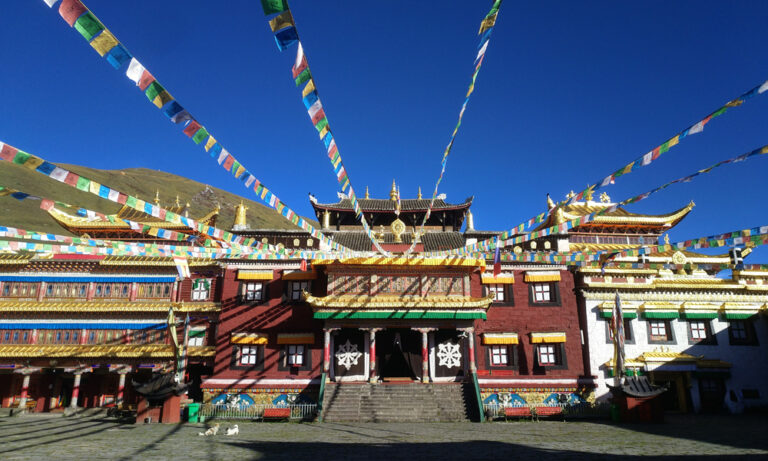

As we descend from the jagged karst towers of Haxiu and return toward the valley floor of Yushu, the horizon begins to ripple with an unexpected sight: a vast, low-slung city built entirely of stone. This is Gyanak Mani, the largest collection of carved prayer stones in the world. While a “city” in name, it has no residents; instead, it is a massive, growing monument of faith that has been under continuous construction for over 300 years.
The history of this site began in the early 18th century with the First Gyanak Rinpoche. Legend tells that he discovered a self-manifested stone inscribed with the mantra Om Mani Padme Hum and placed it here to bless the valley. Over the centuries, pilgrims, monks, and travelers have added their own stones to the pile. Today, it is estimated that the “city” contains over two billion stones, creating a rectangular mound that stretches nearly a kilometer in length and reaches heights of three meters in some sections.
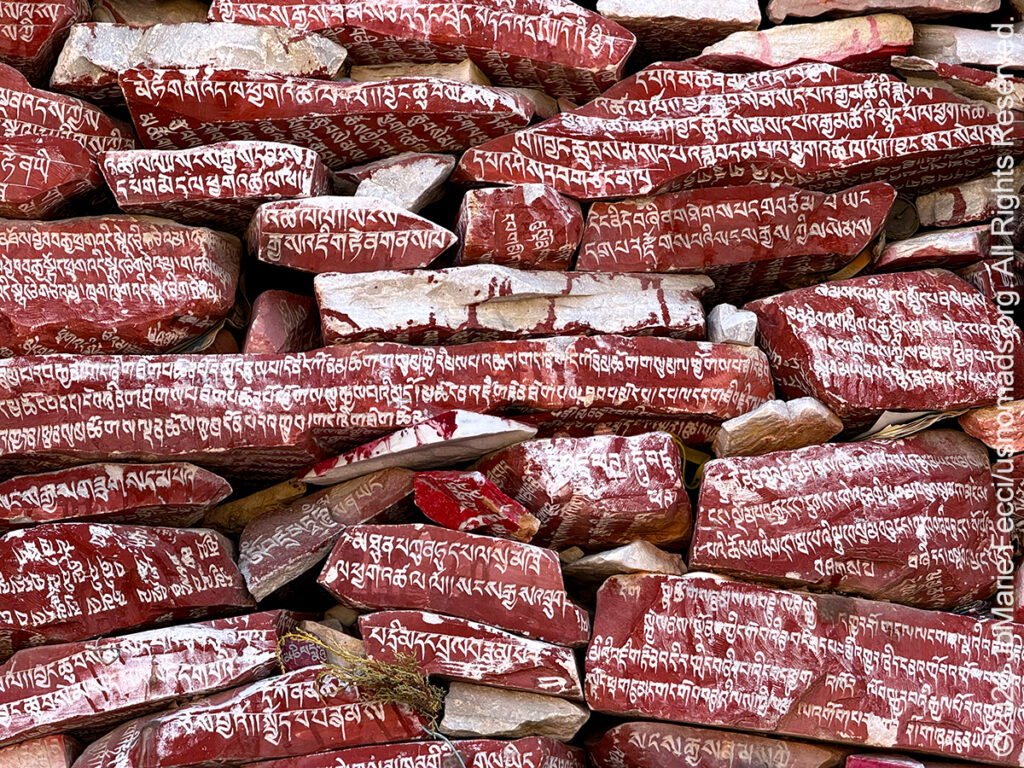
Every single stone at Gyanak Mani is a work of art. The mounds are composed of “Mani stones”—slabs of slate or river rock hand-carved with Buddhist mantras, intricate deities, and sacred scripts. For the local community, carving a stone is a form of “merit-making,” a physical manifestation of a prayer that will remain on the earth long after the person who carved it has passed away. The sound of hammers and chisels is the constant background music of the site, as local artisans sit in nearby stalls, continuing a tradition that has survived earthquakes, revolutions, and the passage of time.
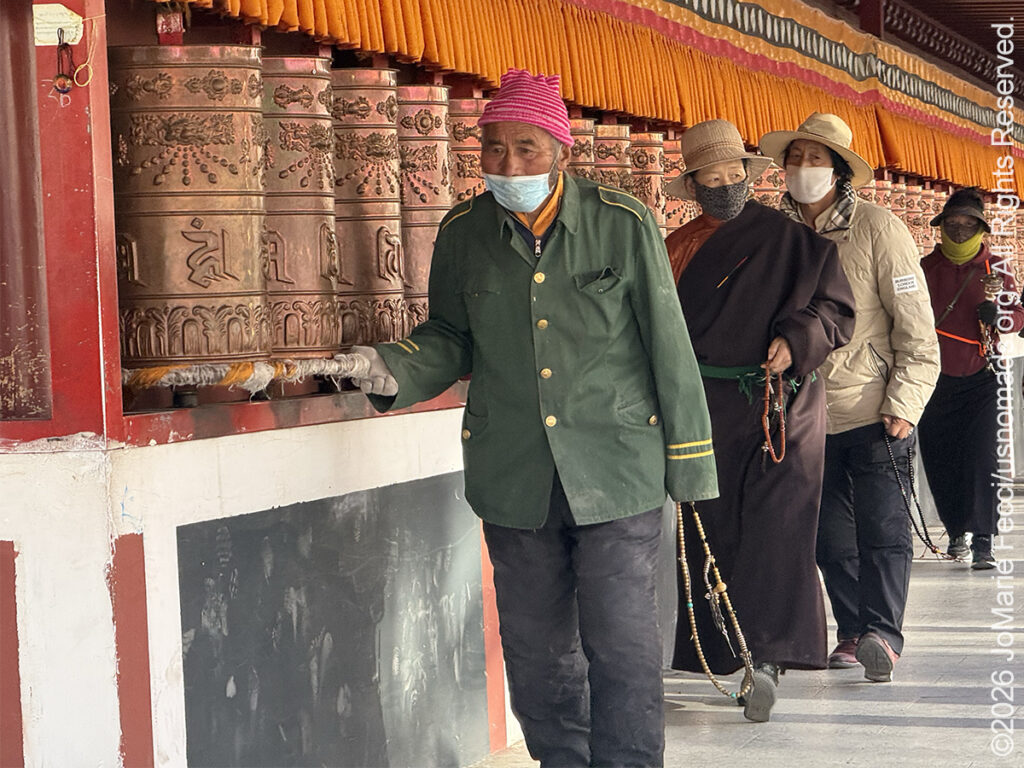
For the traveler, Gyanak Mani serves as a profound cultural crossroads. Because of its location near the historic Tea Horse Road, it historically functioned as a spiritual lighthouse for the merchant caravans. Before heading out into the dangerous, high-altitude passes or upon returning safely with a load of tea, traders would walk the kora—a devotional circumambulation around the entire stone city. This ritual walk remains central to life in Yushu today; at any hour, you will see a stream of people—from elderly nomads in sheepskin robes to young professionals in modern dress—circling the stones in a clockwise direction, spinning prayer wheels and chanting under their breath.
 The scale of Gyanak Mani is so immense that it creates its own micro-environment. The sheer mass of the two billion stones holds the sun’s heat, making the air around the mound slightly warmer than the surrounding plateau. Walking the narrow alleys between the stone walls feels like navigating a labyrinth of collective memory. Each stone represents a personal hope, a grief, or a prayer for the well-being of all sentient beings, making it perhaps the most concentrated site of human intention on the planet.
The “indomitable spirit” of Yushu was put to its greatest test on April 14, 2010, when a massive 7.1-magnitude earthquake struck the region. The disaster leveled much of the town and dealt a devastating blow to its cultural heart. The Gyanak Mani Stone City, a site that had survived for three centuries, was reduced to a chaotic tangle of rubble. Millions of sacred stones fell from their mounds, and three of the eight landmark pagodas that anchored the site collapsed entirely.
In the immediate aftermath, the restoration of Gyanak Mani became a symbol of the community’s recovery. Long before many residents began repairing their own homes, they returned to the stone city. Local Tibetans, monks, and soldiers worked side-by-side to salvage the inscribed slates from the debris. The Chinese government eventually invested over 50 million yuan ($7.6 million) specifically for the restoration of the mound. This was not a typical construction project; it required the expertise of indigenous masons who understood the traditional techniques of stacking stones without mortar, ensuring that the “Living Library” maintained its historical and spiritual integrity.
Today, the restoration is not only complete but has resulted in a site that is larger than the one that existed before the quake. By 2026, the collection has grown to nearly 4 billion stones. A modern, vernacular Visitor Center was also constructed using recycled earthquake debris and traditional stonemasonry, serving as a bridge between the tragic event and the city’s future. The site remains a “living” monument; every day, pilgrims continue to add new carvings to the walls, effectively “healing” the landscape one prayer at a time. The resilience of Gyanak Mani proves that while the earth may shake, the collective memory and faith of the Yushu people are set in stone.
While Gyanak Mani is a site of profound spiritual devotion, it is also the engine of a unique local economy that has sustained the community for centuries. The act of adding a stone to the massive mound is not merely a symbolic gesture; it is a transaction of merit that supports a specialized class of artisans. In the village of Sengze and the surrounding Yushu area, the “Mani stone economy” is a primary livelihood, with some estimates suggesting that nearly 40% of the local population is involved in the production, transport, or sale of these sacred carvings.
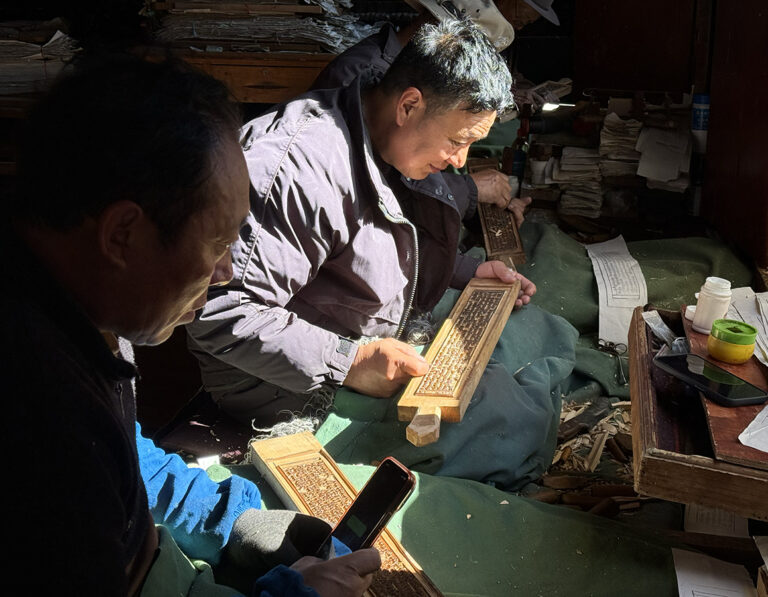
The traditional process of creating a Mani stone is labor-intensive and requires significant skill. Historically, carvers used simple iron chisels and hammers to manually inscribe mantras into slabs of slate or white limestone. This “hand-carving” remains the gold standard for religious merit, and modern competitions are still held to honor the master carvers who can produce the most elegant and precise script. However, the physical toll of this work is high, leading many younger artisans to adopt modern tools. Today, it is common to see carvers using Dremel-like rotary tools to etch the stone, a method that is still considered “hand-crafted” because it requires the steady hand and artistic judgment of the carver.
In recent years, the economy has shifted again with the introduction of laser-engraving technology. These machines can produce hundreds of perfectly uniform stones in a single day, often at a lower price point than hand-carved versions. While some traditionalists argue that laser-etched stones lack the “soul” and depth of manual carving—noting that the shallow etchings may wear away after a few years in the harsh mountain elements—many buyers prefer them for their clean, aesthetic appearance. This technological shift has created a complex market where high-speed production meets ancient tradition, allowing the “Stone City” to grow at an unprecedented rate.
The demographics of the carver community are also changing. Following the 2010 earthquake, many local Yushu families shifted into the booming real estate and tourism sectors, leading to an influx of “migrant carvers” from neighboring regions like Chamdo. These artisans travel to Yushu specifically to work in the Mani stone trade, renting stalls near the mound or selling their wares directly to pilgrims. Despite these shifts in technology and personnel, the core economic logic remains unchanged: as long as the people of the plateau continue to value the generation of merit, the rhythmic “thwack-thwack” of the carver’s tools will continue to be the heartbeat of Yushu’s economy.