The desert is a master of illusion. From a distance, it looks empty: a vast expanse of earth stretching toward distant mountains, the horizon dissolving into heat and light. At first glance, there may be no obvious signs of life, just that enormous, silent surface with nothing beneath it but sand and stone. Yet if you take the time to explore it, you quickly learn that the desert is not empty; it is a vault full of hidden things.
Consider how the land itself is constructed. Approach what appears to be a flat, featureless stretch of earth—perhaps a wash in Anza-Borrego or an unremarkable crease in the Mojave—and you will find no obvious canyon in sight. Then, without warning, the ground simply drops away, opening into a deep, narrow incision in the landscape. Stand a few hundred yards back, and you could easily drive right past it—or worse, straight into it.
That sudden geological theater captures the magic of desert country: it keeps its secrets. Sometimes they are hidden canyons or washes that plunge beneath the surface; other times, they are a matter of survival.
Travel through the deep Sahara, and the landscape seems to offer almost nothing. Mile after mile yields only relentless rock, blinding sand, and oppressive sun. Yet those who truly inhabit that terrain see an entirely different world. Where the uninitiated perceive only barren cliff faces, they see water. Led to a seemingly insignificant crack in the stone, a traveler discovers a hidden pool—an enduring resource waiting to be found by those who know where to look.
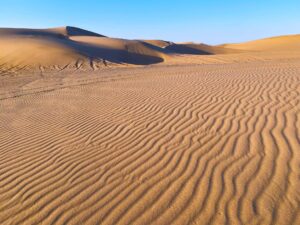
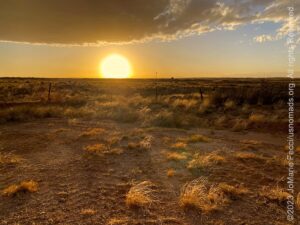
The desert teaches you that seeing is not the same thing as looking. Stare across a hundred miles of open country, and you perceive only distance. But look closer, and the apparent emptiness fractures. Mountains emerge from the blur of the horizon; dry washes reveal the ancient, ghost-like paths of water; animal tracks stitch across the dunes. The desert is full of entrances, provided you learn how to recognize them.
Perhaps that is why these landscapes are so compelling through a camera lens. They invite an entirely different kind of attention. The sheer volume of space initially overwhelms the eye, but time unravels the layers. A distant mountain becomes the dramatic foreground for another range behind it, while a passing cloud shadow maps the hidden architecture of a canyon.
The desert thrives on contradiction. It is harsh yet extraordinarily beautiful, apparently lifeless yet teeming with an astonishing diversity of organisms. It feels completely exposed while concealing entire worlds within its folds. Ancient beyond comprehension, it is nonetheless constantly rewritten by the wind. And a brief, explosive bloom of a desert flowers answering a rare gift of rain seems completely magical.
Indeed, the desert holds time differently.
Somewhere along this continuum lies the human experience of traveling through it. The desert is never merely a scenic backdrop; it is profoundly demanding. Heat tests your preparation, distance tests your patience, and isolation tests your judgment. When a wrong turn carries real weight, the convenient buffers of modern life fall away, leaving you much closer to the consequences of your decisions.
Out there, you have to pay attention. You must know where you are, what you carry, and what contingencies await. That elemental reality silences the clutter of daily life, leaving only the raw landscape and yourself within it.
Maybe that is the deeper mystery of the desert. It does not just hide things from us; it reveals things about us. It exposes how we react when familiar comforts vanish. It teaches patience because the landscape refuses to surrender its beauty on demand, and it instills humility because the weather and the distance are entirely indifferent to our schedules.
The desert can be unforgiving, but it is deeply generous in return. It offers silence, space, and perspective. That is what keeps drawing me back—not an attraction to emptiness, but a hunger for what that emptiness conceals: the hidden canyon, the secret water, and the shifting light that will never happen quite this way again.
The desert asks us to look past what is immediately visible. And after years of exploring it, we still feel as though we have barely begun to see.