For decades, no matter how far I travelled I always eventually returned to the familiar rhythm of Long Island, NY: the stop-and-go crawl of traffic on the LIE, the hum of commuter gridlock, and the tight, fenced-in boundaries of suburban property lines. It’s a fast, high-friction environment where time is measured in red taillights and green traffic lights, and where carving out space for real wilderness requires a deliberate, hard-fought escape via bridges and tunnels – the EZ pass is our only way “out.”
Now I’m starting a new chapter. This September, as I load up the Jeep for another cross-country road trip, I’m packing up my roots for good. I’m making this roadtrip a one-way migration towards the wide-open horizons and rugged expanses of the southwest, where I’m setting up a new home base.
Shifting Gears
Moving across the country is one thing; doing it via a 14-day overland transit is an entirely different approach. Instead of simply loading up a conventional moving truck, sealing the doors, and burning straight down the interstate on a four-day blitz, I am treating the relocation as what it truly is: a transition. And I’m taking the slow road.
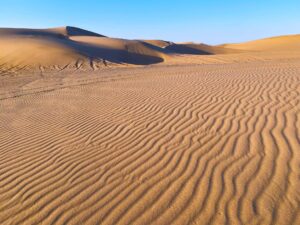
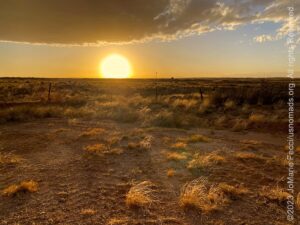
I’m hoping this will let me really experience the profound psychological shift of crossing the American interior. The horizon opens up. The sky gets bigger. The frantic claustrophobia of the urban corridor is replaced by the vastness of the high plains, the skeletal ribs of the western mountain ranges, and the silence of the desert floor. It’s a gradual reveal that offers time to reflect while racking up the miles.
Why the Slow Road Matters
Dropping anchor in a brand-new place shouldn’t feel like a sudden fracture between who you were and who you are going to be. By mapping out a two-week overland route through the heartland, I get to bridge that gap on my own terms.
The slow road gives me a chance to “decompress” my mindset. Shedding the mental stress of the densely populated east coast requires room to breathe, both literally and figuratively. When tight schedules, crowded expressways, and endless urban background noise have shaped your environment for so long, finding your footing takes distance. Every hundred miles of open highway acts as a reset button, helping to dissolve the constant friction of the past and clearing the slate for what comes next.
And maybe more importantly, the slow road let’s me properly “honor” the transition. A major life relocation deserves a proper threshold. Rather than waking up one day in New York and the next in Nevada, I get to live the transition, seeing the ecosystem, the architecture, the topography, and the culture evolve mile by mile. It makes the move feel like a true passage rather than just a change of address.
The Road Ahead
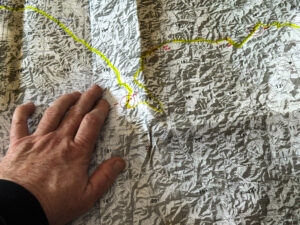
The tollbooths are staying behind in the rearview mirror. Ahead lie the trailheads, the backroads, and a brand-new home base waiting under the desert sun. Over the next two weeks, I’ll be documenting my own story of migration—sharing the daily route notes, waypoints, logistical hurdles, and scenic highlights right here.
If you’ve ever looked at a map, wondered what lies past the horizon, or dreamed of trading the daily gridlock for a life closer to the dirt, pull up a chair. The engine is warm, the gear is packed, and the slow road west is getting ready to open.