Day 5: IA to NE — Where the Prairie Meets the Sky
The Great Plains don’t announce their arrival. There is no mountain pass, no dramatic shift in elevation, no billboard declaring that you’ve crossed into a different kind of country…

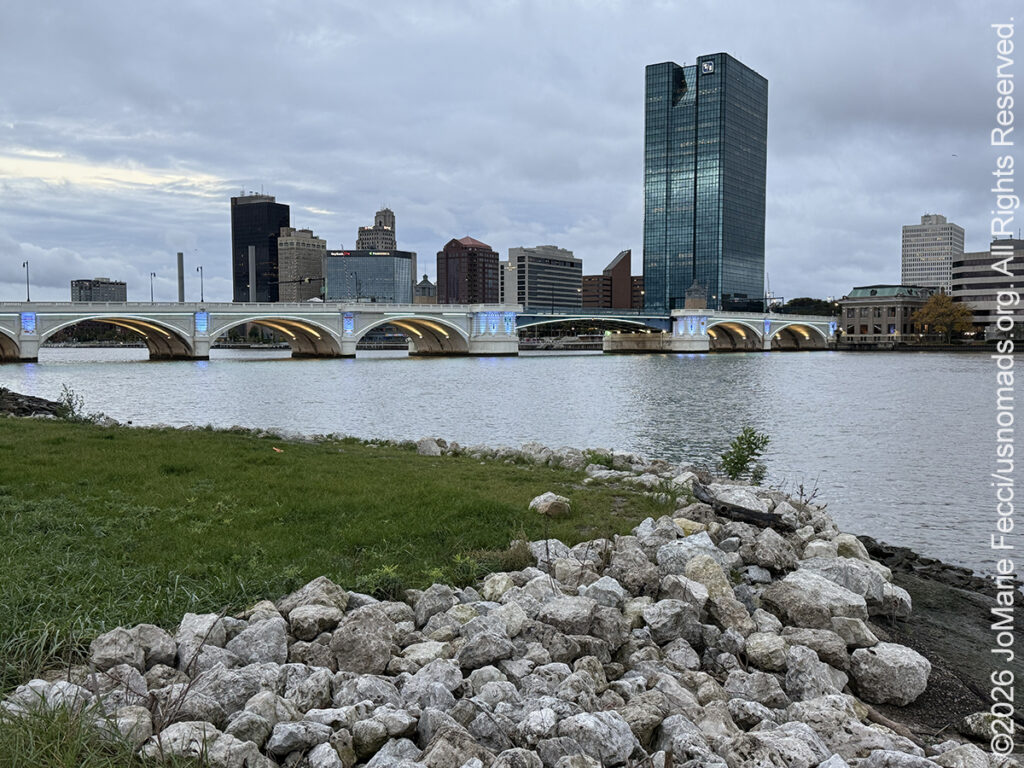
 Long before sunrise, the quiet hum of the Jeep’s engine cut through the pre-dawn darkness of Toledo, Ohio as I navigated toward the Maumee River at Glass City Metropark. I reached the river’s edge just as the first cold light of morning began to emerge. Dark, bruised clouds shifted overhead, but the air along the water was remarkably still. Across the river, city’s skyline rose behind the illuminated spans of a bridge, catching the soft blue twilight of a city just beginning to wake.
Toledo has a distinct, honest identity, one grounded in red-brick industrial grit and a long history of American manufacturing. But its waterfront has been undergoing a quiet renaissance. Glass City Metropark is part of that transformation, turning former industrial land into accessible public space. What makes this stretch of riverfront particularly interesting, though, is that renewal hasn’t meant erasing the working landscape. The river is still an industrial artery, and the port remains very much alive.
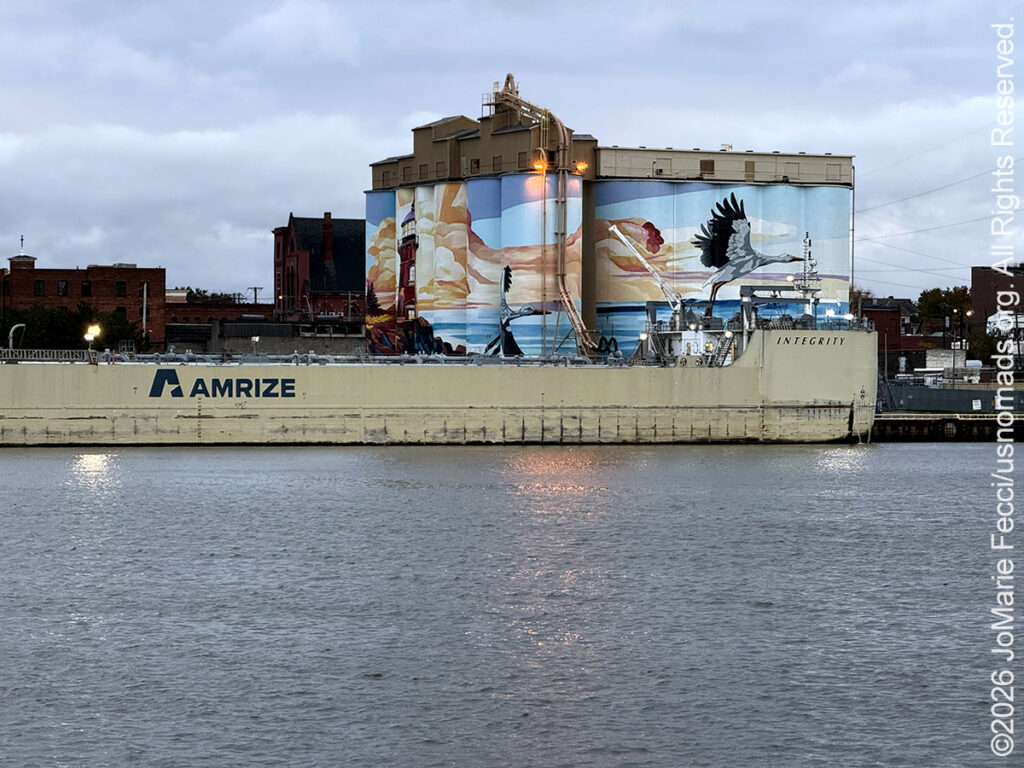
Directly across the water, towering concrete cement silos provided a striking counterpoint to the morning sky. Their immense gray surfaces had become a canvas for a vivid mural depicting a lighthouse, soaring blue herons, and other water birds. As I set up my camera along the bank, a freighter sat docked beside the silos, actively loading. The juxtaposition was hard to miss: a working vessel alongside monumental industrial structures transformed by public art. These weren’t abandoned relics repurposed as picturesque backdrops. They are part of a living, working port — their utilitarian purpose continuing beneath a layer of color.
 The mural is part of a broader effort to bring large-scale public art into Toledo’s industrial landscape, complementing projects such as the Glass City River Wall, championed by local artists and community organizers including Dean Davis. Across the city, expanses of concrete and steel have become opportunities to tell new stories without disowning the old ones. The work celebrates Toledo’s industrial backbone and its connection to the Maumee River while giving the city a fresh way to see itself.
I finished photographing the riverfront just as the weather began to make good on its threatening appearance. The quiet morning along the Maumee was behind me, and as I left Toledo, the storm came with me.
The route cut into the broad agricultural landscape of western Ohio, where cornfields stretched toward the horizon in long, orderly rows. Under different skies, it might have been a peaceful stretch of driving. Instead, I was already battling the wind and rain, with dark clouds pressing low over the flat landscape. The open farmland offered little shelter from the gusts, and the weather would remain a constant presence for the rest of the day.
As I pushed into Indiana, the storm continued to hammer the prairie. Powerful crosswinds battered the Jeep while torrential rain swept across the highway. The lifted rig caught the full force of the gusts, and the wipers struggled to clear the windshield as sheets of water blurred the road ahead. At times, visibility deteriorated so badly that simply keeping track of the traffic around me demanded constant concentration.
The worst part was how relentlessly the storm kept going. A band of rain would finally thin, revealing a few miles of gray pavement beneath a lighter sky. I would begin to think I had passed through the worst of it, only to round another stretch of highway and drive straight into a fresh wall of water. The cycle repeated itself for hours: driving rain, punishing wind, blinding spray from passing trucks, then a brief lull that offered just enough relief to make the next squall feel like a new assault.
Driving through weather like that is physically tiring, but the mental strain can be even worse. There is no opportunity to relax when every gust pushes against the vehicle and every downpour changes what you can see. The miles accumulate, but progress feels slow and uncertain. I had started the day looking for interesting light along a river. Now, mile after mile, I was concentrating on keeping the Jeep steady, watching the traffic, and finding a safe way through the weather.
By late afternoon, I pulled off near South Bend for dinner at Corndance Tavern in Mishawaka. After hours of gripping the wheel and concentrating on the road, the chance to get out of the Jeep, escape the wind, and sit down to a proper meal felt like a small luxury.
The restaurant takes its name from the traditions of the Potawatomi, whose connection to this region is rooted in the land and the seasons. Known as the “Keepers of the Fire,” the Potawatomi maintained traditions centered on farming, food, harvest, and gathering. Corndance draws inspiration from that heritage, emphasizing seasonal ingredients and locally sourced food. After a day spent battling the elements, stepping inside for a good meal and a respite from the storm was a welcome change of pace.
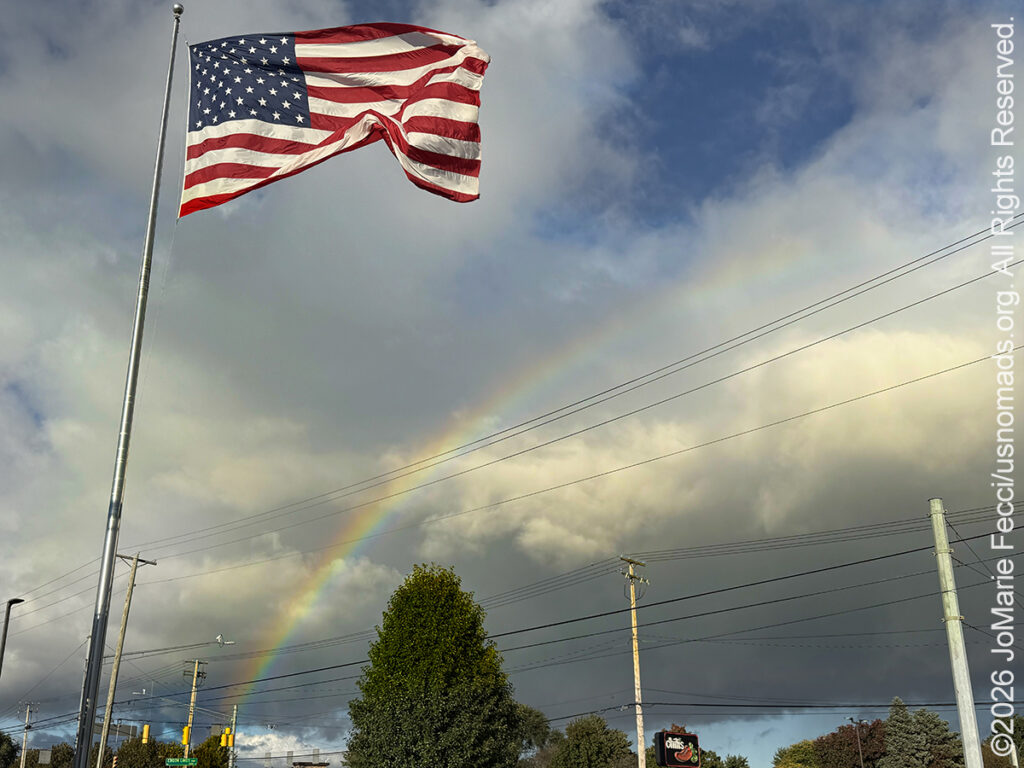 Then came the rainbow.
When I stepped back into the parking lot, the clouds had parted just enough to reveal a broad, vivid arc of color stretching across the sky. After hours of wind and rain, it was a spectacular sight, and for a moment it seemed to offer a reassuring conclusion to the day’s ordeal. Perhaps the storm had finally moved on. Perhaps the worst was behind me.
It was a short-lived illusion.
Back on the road, I found myself facing yet another challenge. By now it was dark, and traffic through the tangle of interstates around Gary, Indiana, had become a sprawling, slow-moving nightmare. With I-65, I-90, and I-80/I-94 funneling traffic through this major crossroads, trucks and commuters crowded the highway, bringing progress to a crawl. It was reminiscent of the legendary gridlock on the Cross Bronx Expressway heading toward the George Washington Bridge back home, except that here I was dealing with it after a full day of driving through punishing weather.
The rain and wind had already taken their toll, and now the stop-and-go traffic added another layer of exhaustion. After hours of battling the elements, even a few miles of highway felt interminable. And when traffic finally loosened, the storm still wasn’t finished. More bands of rain swept across the road as I continued through northwestern Indiana, the wind persisting while the darkness closed in around the Jeep.
Eventually, I crossed the state line into Illinois and called it a night in Kankakee, grateful to be off the road.
What a day! It had begun innocently enough with the quiet beauty of a working riverfront, where industrial infrastructure and public art shared the first light of morning. But it only ended after hours of storm driving, a brief and deceptive rainbow, and a nighttime traffic jam that tested what little patience and energy remained. The prairie had offered no dramatic mountains or winding trails, but it had delivered its own kind of challenge. On a long overland journey, the road doesn’t always follow the rhythm of the itinerary. Sometimes the landscape gives you a photograph worth stopping for; sometimes the weather demands every bit of attention you have. And sometimes, even after a rainbow, the storm isn’t finished with you yet.
The Great Plains don’t announce their arrival. There is no mountain pass, no dramatic shift in elevation, no billboard declaring that you’ve crossed into a different kind of country…
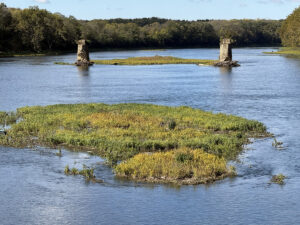
The river outlasted the bridge. Along the Kankakee River in Illinois, old stone or concrete pylons stood in the water, the structure they once supported long gone…
Long before sunrise, the quiet hum of the Jeep’s engine cut through the pre-dawn darkness of Toledo…
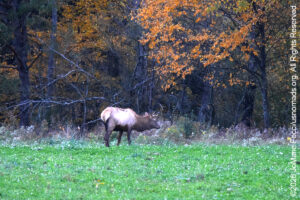
Dawn changes the character of a place. In Benezette, the valley is quiet again…