
Every
Alburgh Dunes, one of the state’s newest parks, features just that: sand dunes, a gift of the age of glaciers.
Out in Lake Champlain’s eastward “Inland Sea” are two alluringly remote state parks set on rugged Knight and Woods islands. These are accessible only by boat—or, as during February’s Great Ice! Festival, by a thrilling hike across frozen Lake Champlain.
If Grand Isle County is Vermont’s offshore discovery, then tiny Isle La Motte, population roughly 500, is the county’s own discovery—the island getaway within the Islands. This is where Europeans first visited Vermont. In 1609, French explorer Samuel de Champlain made a stop here on his maiden trip along the lake that would eventually bear his name. Nearly 60 years later, French soldiers built a fort as a southern outpost of their Quebec domain. Today this corner of Isle La Motte is home to the Roman Catholic St. Anne’s Shrine, a popular pilgrimage destination.
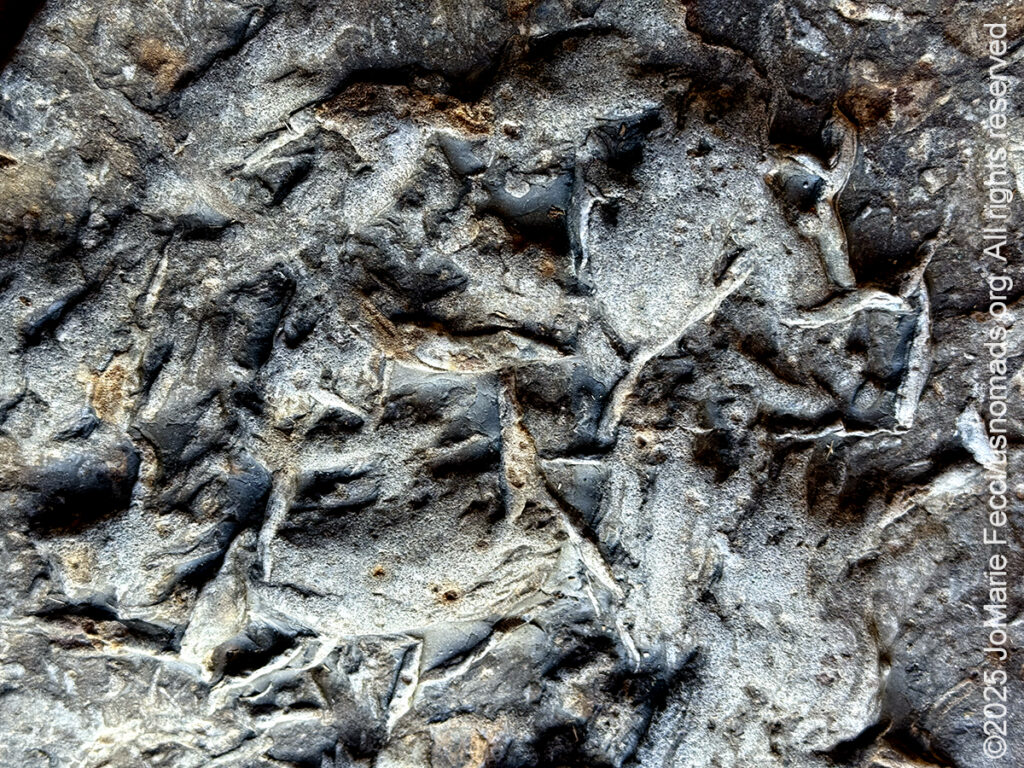
A northward ramble through the Champlain Islands ends at Isle La Motte, but in a grander sense it also ends more than 400 million years ago. That’s according to the fossils at the now high-and-dry Chazy Reef. These are relics you may have encountered before, because they speckle the dark limestone that was quarried here for use in places like New York’s Radio City Music Hall and the National Gallery of Art in Washington, D.C.
So while they remain staunchly “off the beaten path,” the Champlain Islands have left their mark on the wider world. And they continue to leave their mark on travelers ready to venture beyond the mainland to relax, reconnect, and make memories in a Vermont region like no other.
Alburgh, on the Canadian border, has a unique sand dune system with one of the longest beaches on Lake Champlain, along with numerous areas to go fishing. Isle La Motte is rich with natural and human history with the statue of Samuel de Champlain marks his landing in 1609 and a 20 acre nature reserve that protects outcroppings of the 480 million year old Chazy Fossil Reef to name a few stops in town.
THE HYDE LOG CABIN
The Hyde Log Cabin, a stout roadside structure built of massive cedar logs, was built by settler Jedediah Hyde in 1783 and is one of America’s oldest surviving examples of this classic home style.
The Hyde Log Cabin, circa 1784, is the oldest in New England, with furniture, clothing, and artifacts attractively arranged as a home setting. There are two glass display cases to view small items and books. The schoolhouse, also known as the “Block Schoolhouse,” was built in 1814 of squared-off (blocked) logs. The cabin and schoolhouse are on U.S. Route 2 in Grand Isle.
The Hyde Log Cabin is a historic log cabin on U.S. Route 2 in Grand Isle, Vermont, United States. It was built in 1783, and occupied by the Hyde family for 150 years. Believed to be one of the oldest log cabins in the US, it was added to the National Register of Historic Places in 1971.
The Hyde Log Cabin stands on the east side of US Route 2 north of Grand Isle center and just north of the Grand Isle Elementary School, sharing a lot with a small wood-frame 1814 schoolhouse. The cabin is a modest single-story structure, fashioned out of peeled cedar logs measuring between 14 and 18 inches in diameter. The building footprint is 20 by 25 feet (6.1 m × 7.6 m), and it is covered with a gabled roof. The interior consists of a single chamber with a loft space above. Its massive stone chimney is a 20th-century reconstruction of the original, the building having been moved about 2 miles (3.2 km) from its original location.
The cabin was built in 1783 by Jedediah Hyde, Jr., who surveyed the Grand Isle Area for Ira and Ethan Allen, who had acquired large tracts of land in the region. Hyde raised ten children in this cabin, and it was subsequently owned and occupied by members of the Hyde family for 150 years. In 1946 it was moved to its present location, and has undergone several rounds of restoration. It is owned by the state and operated as a historic house museum by the Grand Isle Historical Society, open on weekends between May and October.
ABOUT THE JOURNEY
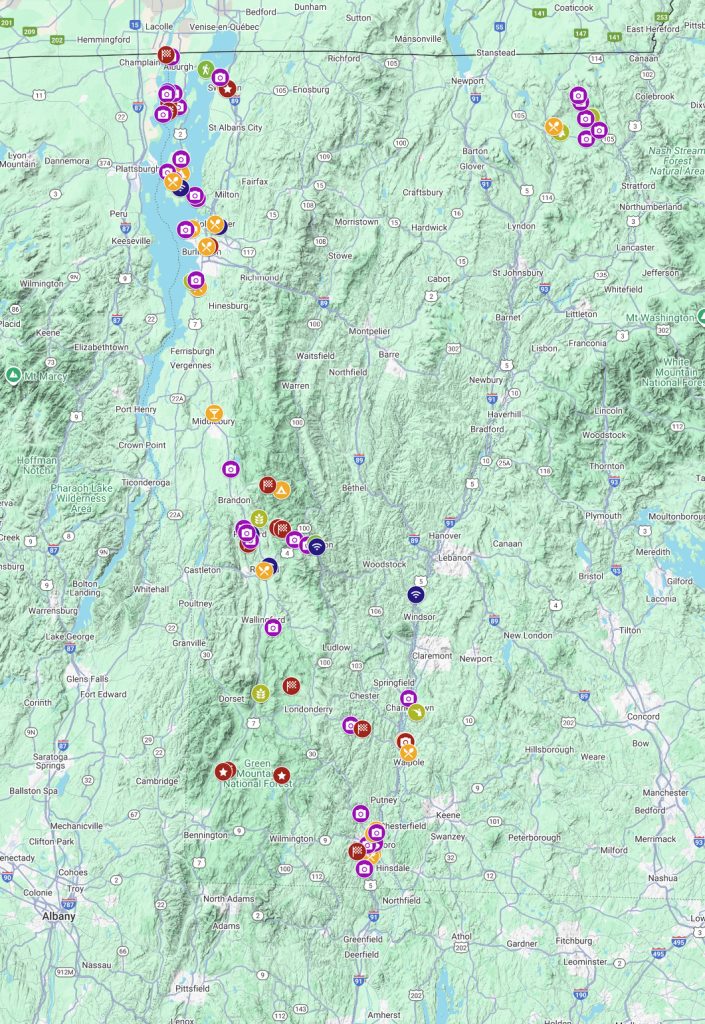
JoMarie Fecci, of USnomads.org, set off on a fun overlanding adventure exploring around the state of Vermont for a few weeks in September. Driving and camping out of her 2019 JL Rubicon, she was able to check out several different regions and enjoy some local cultural and historic sites while en route to “Beaver Camp” at the Bonnyvale Environmental Education Center in Brattleboro. The 2nd Annual “Beaver Camp” is a workshop event dedicated to resolving human-wildlife conflicts with workable solutions that allow the beavers to continue their important role as a keystone species restoring and conserving wetland ecosystems.
WHERE WE ARE
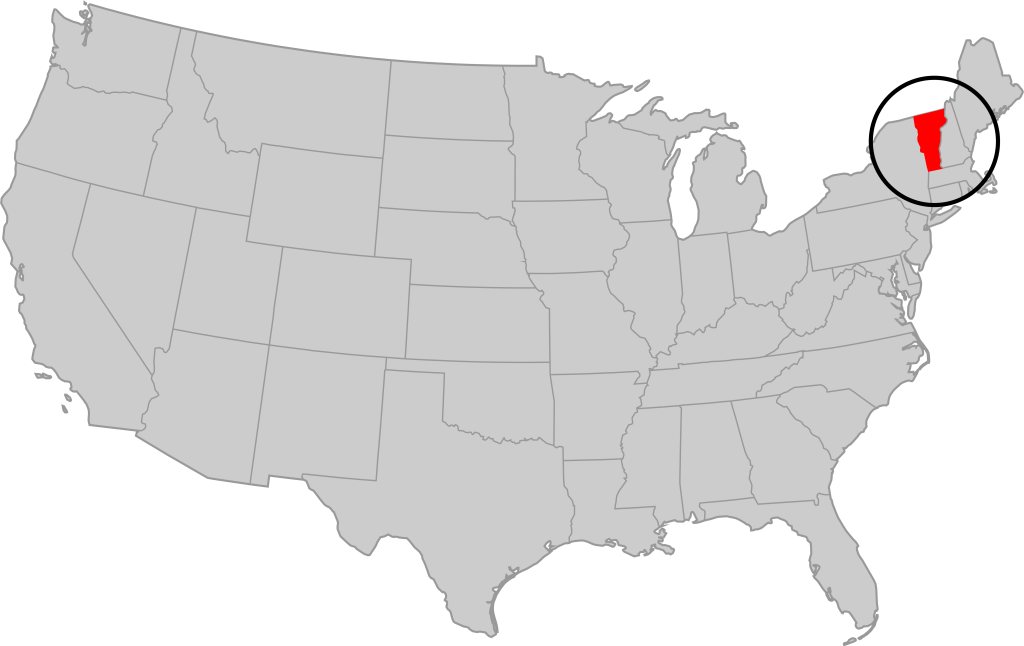
Vermont is part of the “New England” region of the United States. It borders Massachusetts to the south, New Hampshire to the east, New York to the west, and the Canadian province of Quebec to the north. The geography of the state is marked by the Green Mountains, which run north–south up the middle of the state, separating Lake Champlain and other valley terrain on the west from the Connecticut River Valley that defines much of its eastern border. A majority of its terrain is forested with hardwoods and conifers. The Algonquian-speaking Abenaki and Iroquoian-speaking Mohawk were active in the area at the time of European encounter, but the history of the indigenous peoples here goes back about 12,000 years. The first humans to inhabit what is now Vermont arrived as the glaciers of the last ice age receded. Small groups of hunter-gatherers followed herds of caribou, elk, and mastodon through the grasslands of the Champlain Valley. At that time much of region was mixed tundra. The oldest human artifacts are 11,000 year old projectile points found along the eastern shore of the saltwater Champlain Sea. This time is known as the Paleo-Indian period. By about 8,000 years ago, the Champlain Sea had become the freshwater Lake Champlain and the climate was more temperate, bringing increased diversity of flora and fauna. By about 4,300 years ago, the forests were as they are today. Large mammals underwent extinction or migrated north, and the human population became reliant on smaller game and plants. Most of the state’s territory was occupied by the Abenaki, south-western parts were inhabited by the Mohicans and south-eastern borderlands by the Pocumtuc and the Pennacook. In 1609, Samuel de Champlain led the first European expedition to Lake Champlain. He named the lake after himself and made the first known map of the area. The French maintained a military presence around Lake Champlain, since it was an important waterway, but they did very little colonization. In 1666, they built Fort Sainte Anne on Isle La Motte to defend Canada from the Iroquois. It was abandoned by 1670. The English also made unsuccessful attempts to colonize the area in the 1600s. In 1724, they built Fort Dummer near what is now Brattleboro, but it remained a small and isolated outpost, often under attack by the Abenaki. Vermont became the 14th state of the United States on March 4, 1791. From north to south, Vermont is 159 miles long. Its greatest width, from east to west, is 89 miles at the Canada–U.S. border; the narrowest width is 37 miles near the Massachusetts border. There are fifteen U.S. federal border crossings between Vermont and Canada. Several mountains have timberlines with delicate year-round alpine ecosystems. The state has warm, humid summers and cold, snowy winters. The topography and climate make sections of Vermont subject to large-scale flooding, and extreme rain and flooding events are expected to intensify with climate change.

