Day 8: SD to NE — Where Time Leaves Its Traces
Fossils, footprints and the history of the High Plains. The road south from Fort Robinson crosses a landscape that seems almost unchanged by time…

The alarm goes off well before dawn. I leave Chadron with the sky still a deep indigo, steering the Jeep north toward Toadstool Geologic Park in hopes of catching the first light on its otherworldly landscape.
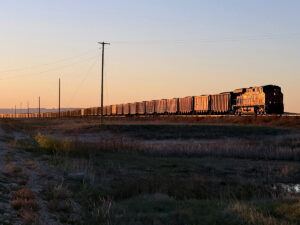
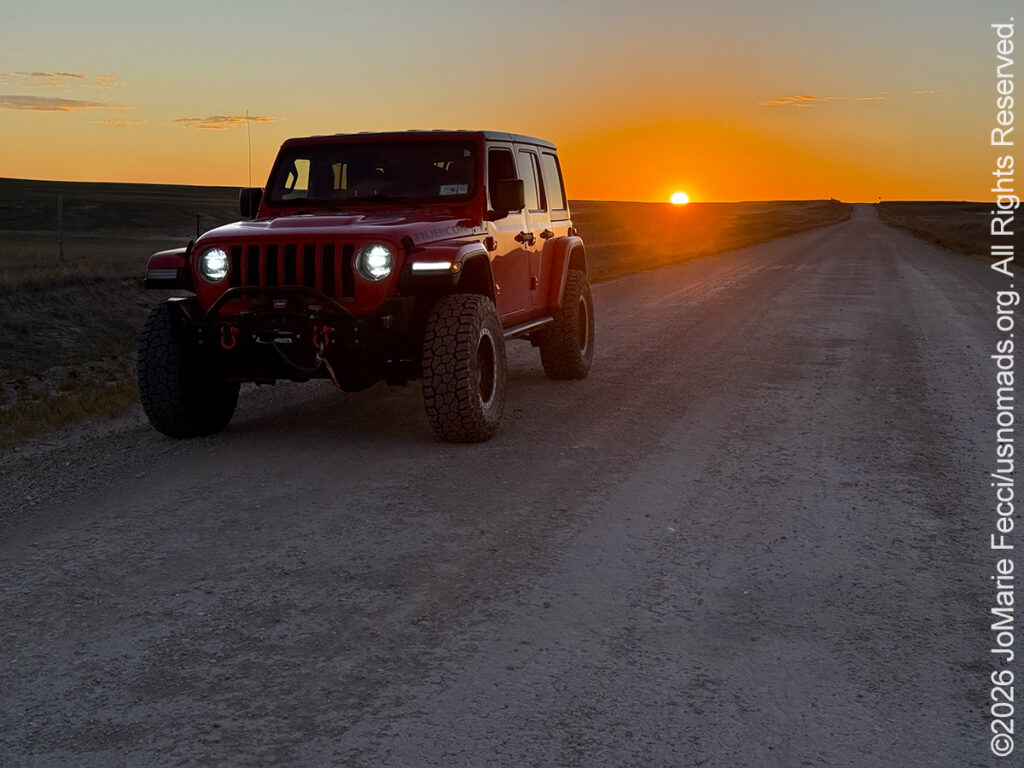 As I drive through the predawn quiet, the horizon gradually begins to glow with a soft, rose-gold light. I pull onto the shoulder to photograph the sunrise, and that’s when I hear it: a low, steady rumble vibrating through the cold morning air. Far below, a freight train stretches across the basin, an seemingly endless line of black hopper cars carrying coal from the Powder River Basin to power plants across the country. In the growing light, the train looks like a massive steel serpent winding through the ancient prairie, an unexpected reminder of the industrial world moving through this otherwise quiet landscape.
Continuing north, I reach Toadstool Geologic Park just as the sun clears the horizon. The morning air is crisp, and the landscape is completely still. From the trailhead, the hiking loop appears deceptively flat and easy, so I confidently set out, leaving my walking stick behind in the Jeep. That would turn out to be a mistake.
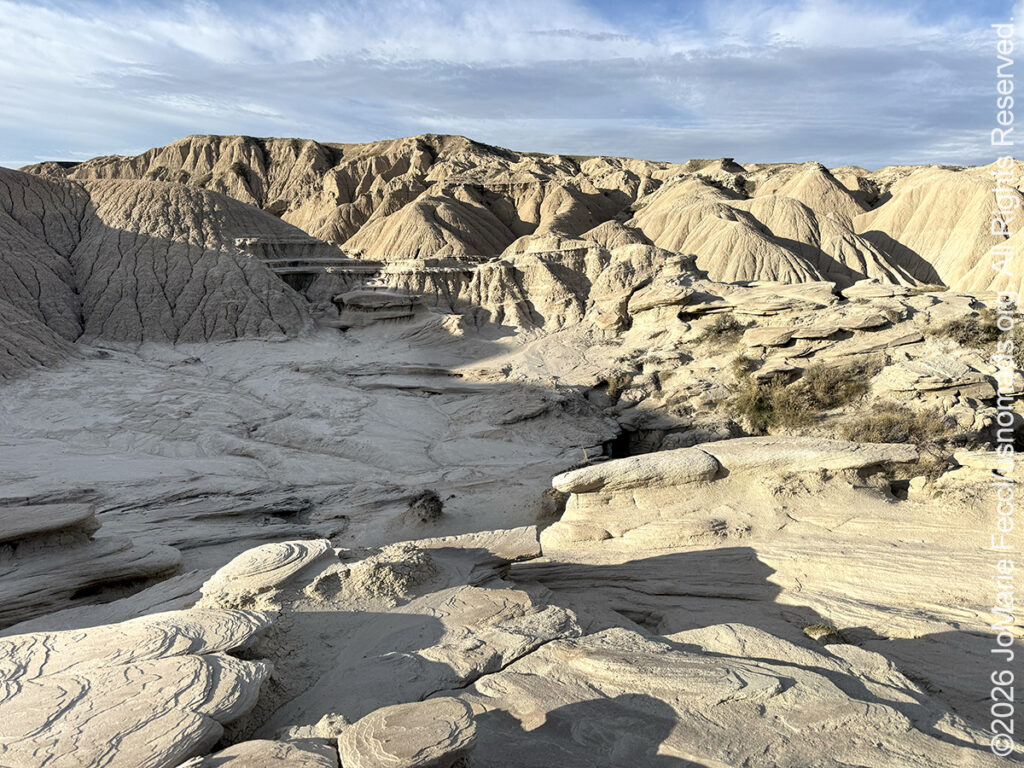
The easy opening stretch doesn’t last. Before long, the trail begins climbing through pale clay formations, with narrow paths and uneven ledges demanding considerably more attention than I’d anticipated. Without my walking stick, every step requires a little extra balance and concentration. But any regret about leaving it behind quickly gives way to the sheer thrill of exploring this strange terrain. Eroded clay formations support improbable sandstone caps, creating shapes that seem almost architectural, or perhaps more at home on another planet. In the low morning light, the shadows accentuate every ridge and curve, making the landscape even more surreal. What looked like a simple morning walk has turned into an exhilarating scramble through alien-looking badlands.
 Back at the Jeep, with the morning still young, I check my offline maps on OnX Offroad. A nearby track catches my attention: Prairie Dog FR 925, cutting through the Oglala National Grassland. I’m in search of some of the prairie dogs that give these grasslands so much of their character, so I turn off the main road and head out to investigate. Unfortunately, this particular excursion delivers absolutely nothing in the wildlife department. Not a prairie dog in sight.
Undeterred, I stay on the dirt, following Hat Creek Road south and west toward Montrose. Today, Montrose is little more than a quiet ghost town, its well-maintained country church standing in stark contrast to the remains of a nearby collapsed homestead. But this seemingly unremarkable corner of the prairie holds a complicated and painful history. It was here, along Warbonnet Creek, that a brief but consequential encounter took place in 1876, an incident remembered as the Warbonnet Creek skirmish.
In the aftermath of the Battle of the Little Bighorn, a group of Northern Cheyenne left the Red Cloud Agency, attempting to join Sitting Bull and the Lakota farther north. They were intercepted by the U.S. Army’s Fifth Cavalry, whose scouts included William “Buffalo Bill” Cody. The resulting encounter was brief, but it became part of a much larger and more troubling chapter in the history of the Plains Wars. Cody killed and scalped the Cheyenne warrior, Yellow Hair (Heova’ehe), an act he later turned into a theatrical spectacle, sensationalizing it as “the first scalp for Custer.”
 Standing in the quiet basin today, the weight of how memory is shaped feels especially stark. Two separate monuments were erected nearby, recording competing truths: one honoring the U.S. Cavalry, the other commemorating the Cheyenne warriors who fought here.
From Montrose, I continue north along the dirt roads, eventually crossing into South Dakota. My original plan for the afternoon is the Mammoth Site in Hot Springs, but somewhere along Highway 71, an unexpected roadside sign catches my attention: the Black Hills Wild Horse Sanctuary.
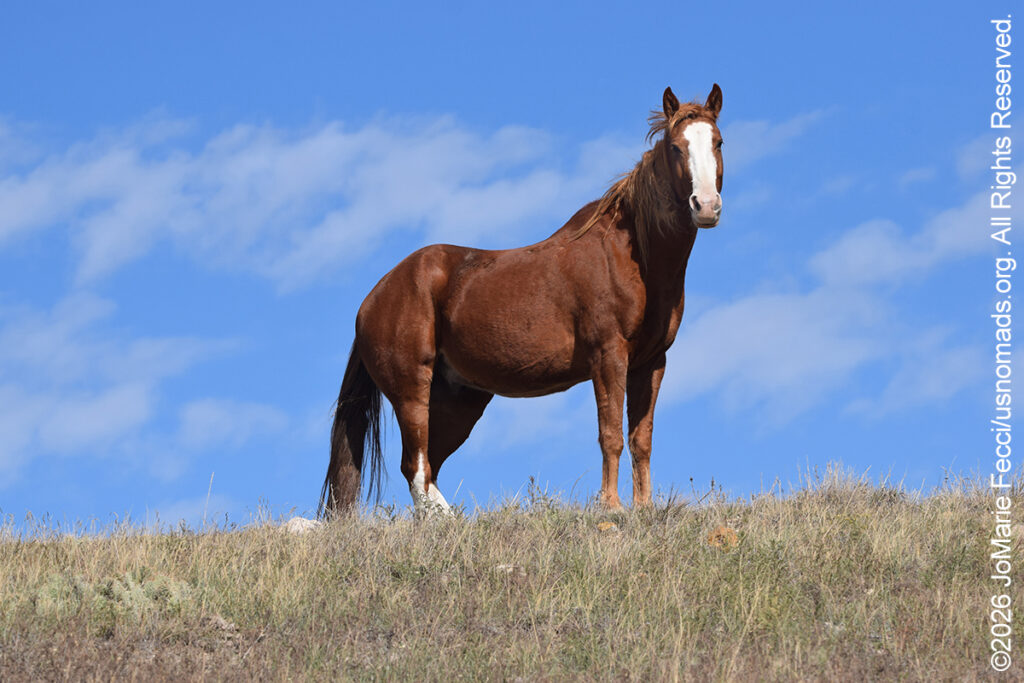
A spontaneous detour is hard to resist, so I turn off to investigate. The sanctuary is an 11,000-acre private refuge providing a home for wild, unhandled Mustangs and rescued horses, allowing them to roam across open grasslands and the rugged red-rock canyons of the Black Hills. Even from the roads around the property, the landscape is striking. Then, movement in the short grass catches my eye.
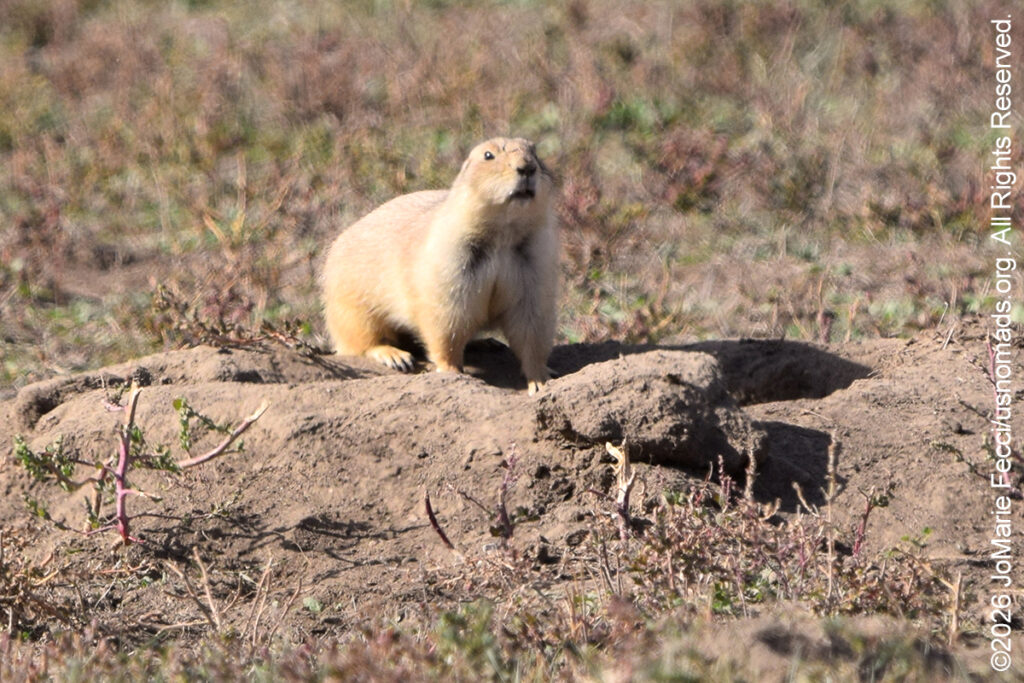
Prairie dogs!
Dozens of black-tailed prairie dogs are popping up among the dry mounds, barking their warnings and disappearing into their burrows. After spending much of the morning looking for them without success, here they are, seemingly everywhere. The irony isn’t lost on me. I’d gone searching for prairie dogs on a designated prairie dog road and found none, only to stumble across an entire colony while following a completely unrelated detour. Sometimes the landscape has its own ideas about where you’re supposed to look.
 Eventually, with the afternoon moving along, I get back on track and continue toward Hot Springs and the Mammoth Site.
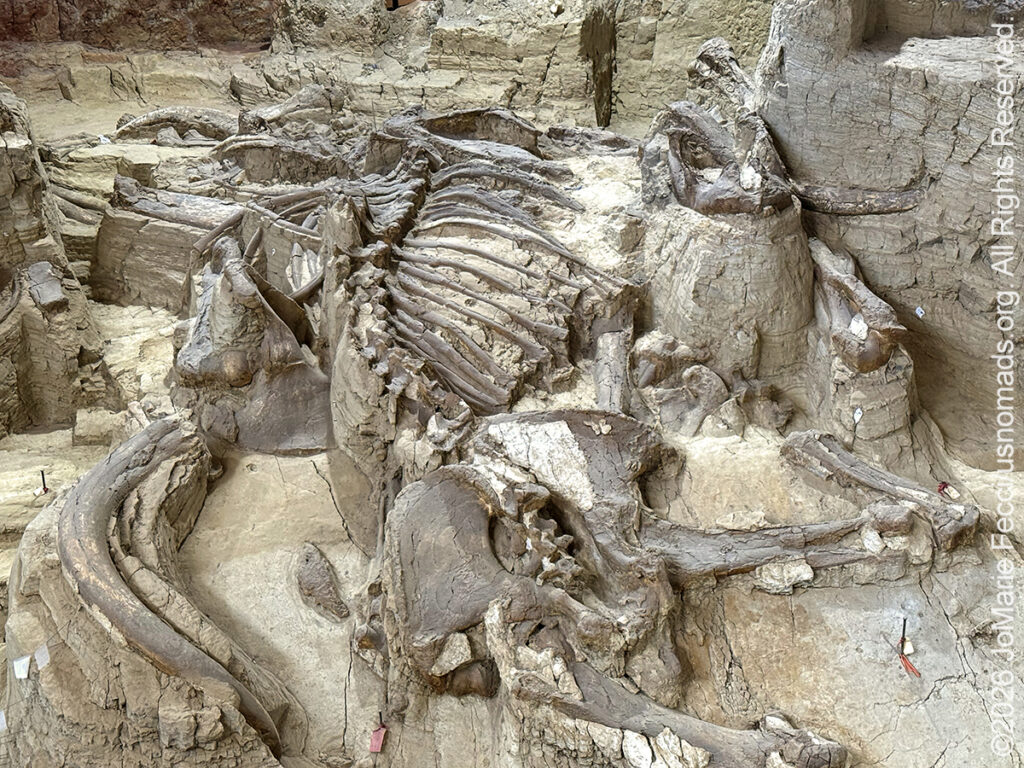
Stepping inside the climate-controlled enclosure, built directly over an active paleontological excavation, is a surreal experience. Around 14,000 years ago, a warm-water sinkhole with steep sides became a natural trap for animals drawn there to drink. Once inside, they couldn’t climb back out. Over thousands of years, their remains accumulated in the sediments, creating one of the world’s most remarkable concentrations of mammoth fossils.
Today, the site contains the remains of more than 60 individual mammoths, including both Columbian and woolly mammoths, along with fossils from other Ice Age animals. Walking along the elevated platforms and looking down at enormous tusks, massive ribs, and bones still partially embedded in the earth, it’s difficult not to be struck by the scale of what lies beneath your feet. This isn’t a collection of fossils removed from the ground and arranged in a museum display. You’re looking directly into the place where these animals lived, died, and were preserved. It’s a remarkable window into a world that disappeared at the end of the last Ice Age.
 By the time I leave Hot Springs, the afternoon is slipping toward evening. I settle back into the Jeep with a huge smile, thinking about how differently the day unfolded from what I’d originally planned. There was no carefully executed itinerary, no straight line between destinations. Instead, there was a freight train at sunrise, an unexpected scramble through the badlands, a quiet piece of complicated Western history, wild horses, a prairie dog colony discovered by accident, and a glimpse into the Ice Age.
It’s a pretty good argument for taking the backroads.
You can plan a route, mark the destinations, and decide what you hope to see along the way. But the real magic happens when you’re willing to take an unplanned turn, follow a road that catches your attention, or simply stop because something looks interesting.
Out here, the best moments are often the ones you never saw coming.
 There is a distinct moment when the Great Plains cease to look like grass and sky.
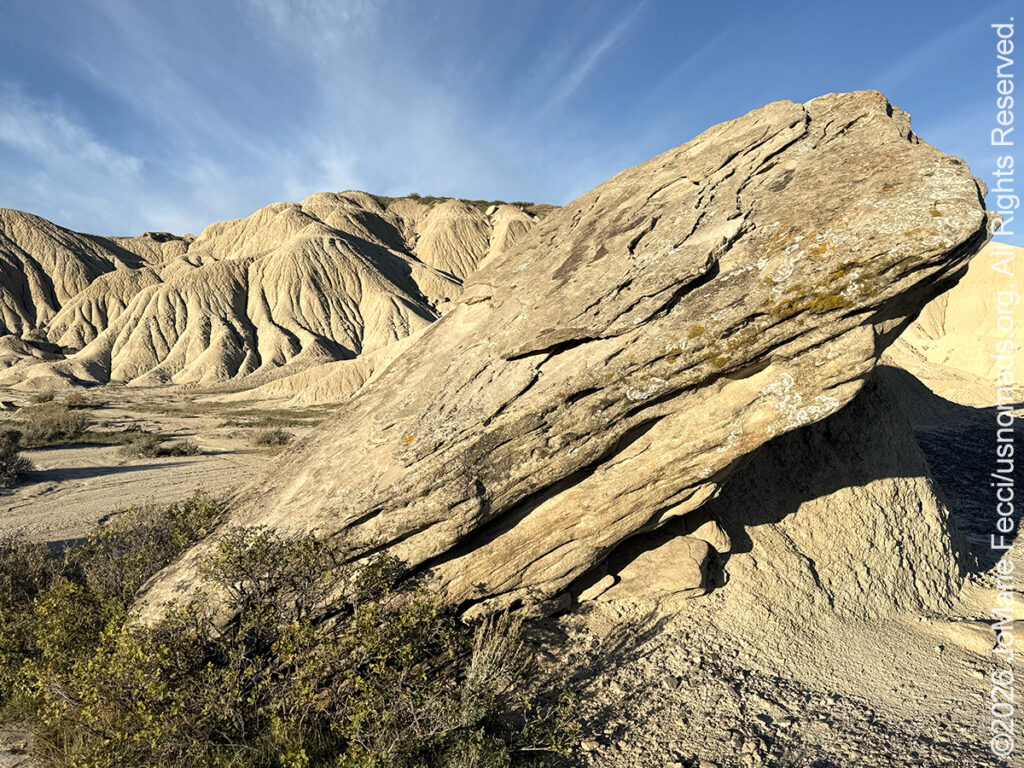
The flat horizon breaks apart. Soft green swells give way to raw, exposed clay, silt, and sandstone. Smooth slopes fracture into gullies, gullies deepen into narrow canyons, and strange, pale pillars rise from the canyon floor with massive slabs of dark stone balanced precariously on their peaks.
This is Toadstool Geologic Park, hidden in the far northwestern corner of Nebraska.
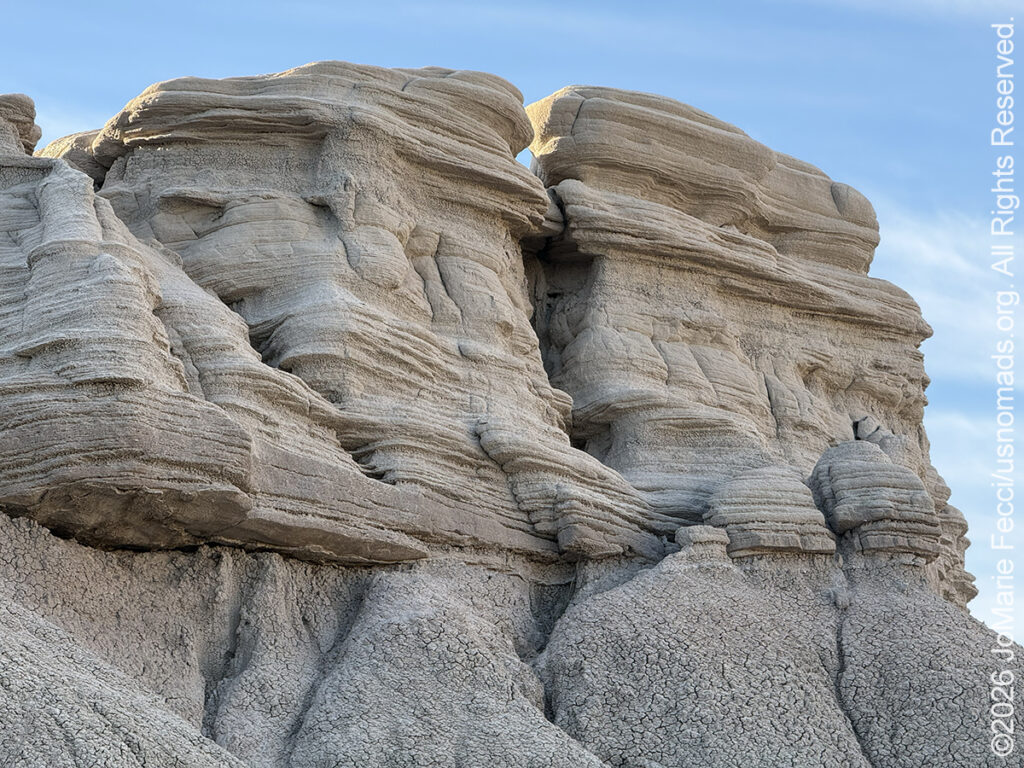
The formations here began 38 to 24 million years ago during the Eocene and Oligocene epochs, formed by vast layers of volcanic ash and river-borne sediments. Over millions of years, water and wind scoured the region. Because the upper sandstone layers were harder than the soft clay beneath, the lower rock eroded far faster, carving out the bizarre, mushroom-like hoodoos that give the park its name.
It is an ecosystem built almost entirely by erosion. And erosion out here is relentless.
Rainwater seeks out tiny fissures in the dry clay. Winter freezes and spring thaws force those cracks wider. Constant, grit-filled prairie winds sandblast loose material away. Bit by bit, soft layers dissolve, leaving only the stubborn, caprock formations behind. The result is a landscape that feels deliberate—almost architectural.
 But Toadstool is far more than dramatic scenery; it is a fossilized world. Encased within these pale layers are the ancient remains of prehistoric mammals—early horses, hornless rhinoceroses, and saber-toothed nimravids that once roamed vast subtropical floodplains. Near the main loop, a remarkably preserved fossil trackway records a fleeting moment from tens of millions of years ago: the deep, overlapping footprints of an ancient entelodont and a rhinoceros crossing a muddy stream bank together. It transforms the badlands from static rock into an active stage set for a world that has long since vanished.
The most disorienting thing about places like Toadstool is that the scenery itself is entirely temporary. Those massive stone hoodoos look immovable and permanent, but they are being actively dismantled even as you stand before them. A heavy cloudburst tomorrow or a hard winter freeze next year will drop a caprock, collapsing a spire that took thousands of years to form. Eventually, today’s hoodoos will crumble into dust, and new ones will be carved from the slopes behind them.
It is a stark physical expression of the eternal and the ephemeral. The rocks are ancient. The land itself is ancient. But the shapes before you are fleeting. Time builds them. Time destroys them. And for a brief, quiet moment, we get to stand in between.
Fossils, footprints and the history of the High Plains. The road south from Fort Robinson crosses a landscape that seems almost unchanged by time…
The alarm goes off well before dawn. I leave Chadron with the sky still a deep indigo, steering the Jeep north toward Toadstool Geologic Park in hopes of catching the first light…
Sandhills, trading posts and the complicated beginning of the “American West.” For hundreds of miles across Illinois, Iowa, and eastern Nebraska, the landscape seemed almost hypnotically flat..
The Great Plains don’t announce their arrival. There is no mountain pass, no dramatic shift in elevation, no billboard declaring that you’ve crossed into a different kind of country…